
5 Engine Noises That Mean “Stop Driving Now”
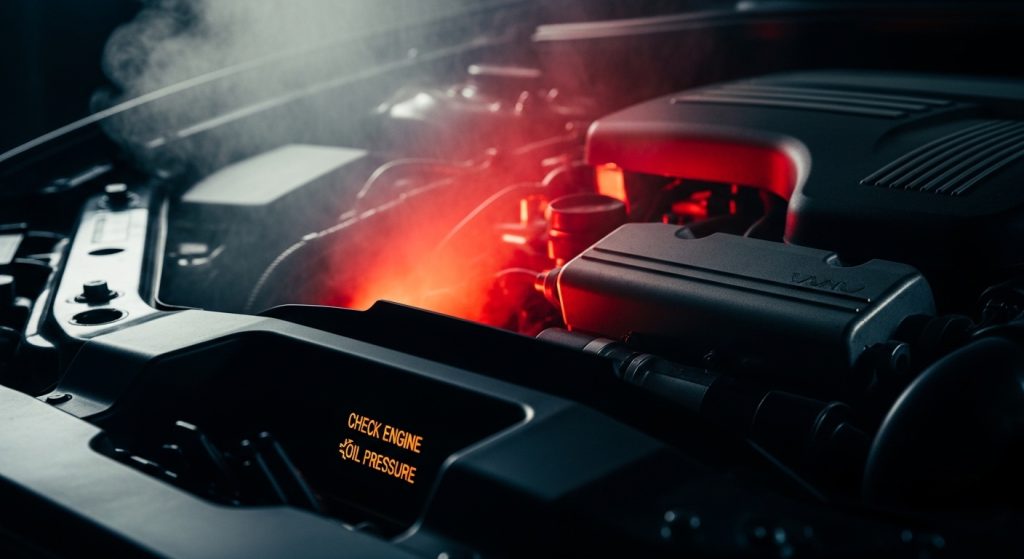
You’re cruising down the highway, music up, when a rhythm that wasn’t on the playlist starts coming from under the hood. Most drivers instinctively turn up the radio to drown it out, hoping it’s just a loose plastic shield or a temporary glitch.
Ignoring engine noises is the fastest way to turn a $100 sensor fix into a $5,000 engine replacement. This guide is for the budget-conscious driver who needs to know exactly which sounds allow for a slow drive to the mechanic and which ones require an immediate “pull over and kill the ignition” response.
What You Will Learn
- How to identify the “Big 5” sounds that signal terminal engine failure.
- The specific mechanical causes behind each noise.
- Why “limping it home” often costs ten times more than a tow truck.
- Proactive maintenance steps to avoid these sounds entirely.
1. The Deep Metallic Knocking (Rod Knock)
If your engine sounds like a heavy hammer is hitting the bottom of the block, you are likely dealing with rod knock. This occurs when the bearings that support the connecting rods wear down or fail entirely.
When these bearings go, the rod starts physically “slapping” against the crankshaft. This isn’t just a noise; it is the sound of your engine’s internal components literally tearing each other apart.
Why You Must Stop Immediately
Continuing to drive with rod knock will eventually cause the rod to snap or “throw,” punching a hole through your engine block. Once there is a hole in the block, the engine is unrecoverable scrap metal. Pull over, turn off the key, and call a tow truck.
2. High-Pitched Shrieking or Squealing
A loud, piercing squeal that gets louder as you accelerate is usually related to the serpentine belt or a seized pulley. While it might sound like a minor annoyance, this belt powers your alternator, water pump, and power steering.
The Hidden Danger
If the noise is caused by a failing water pump bearing, the pump could stop spinning entirely. Without coolant circulation, your engine will overheat within minutes, warping the cylinder head. If the belt snaps, you’ll lose power steering and battery charging, potentially leaving you stranded in a dangerous traffic lane.
- Check the belt: Look for fraying, glazing (a shiny appearance), or cracks.
- Listen for the location: If it’s coming from the very front of the engine, it’s belt-related.
3. The Rhythmic “Tapping” or “Ticking”
Often confused with fuel injectors, a loud, rhythmic ticking that speeds up with the RPMs usually points to low oil pressure or a failing valvetrain component (like a lifter).
The Cost of Friction
Oil is the only thing preventing metal-on-metal contact inside your engine. A loud tick often means the top of the engine is “running dry.” If you keep driving, the friction generates enough heat to melt metal components together, effectively seizing the engine.
Pro Tip: Check your oil dipstick immediately. If it’s dry, adding oil might stop the noise, but you still need to find out where that oil went.
4. Hissing or Steam Whistling
If your car sounds like a boiling teakettle, you have a high-pressure coolant leak. This is often accompanied by a sweet, maple syrup-like smell.
The 60-Second Rule
Aluminum engine heads can warp in as little as 60 seconds of extreme overheating. If you see the temperature needle climbing toward the “H” or a “Coolant Temp” light on the dash, you have reached the point of no return. Stop the car before the head gasket blows, which is a repair that often exceeds the value of older vehicles.
5. Heavy Grinding During Gear Shifts

While not strictly “inside” the engine block, a heavy grinding sound when moving or shifting indicates a catastrophic transmission or differential failure.
The Safety Risk
A grinding transmission can “lock up” without warning. If your drive wheels lock at 60 mph, you lose control of the vehicle entirely. If the noise sounds like metal teeth being fed into a blender, the internal gears are shredding.
The “Save My Wallet” Strategy: EEAT in Action
As someone who has spent years under hoods and consulting with master techs, I’ve seen the “just one more mile” mistake too many times. I once worked on a Honda where the owner heard a “minor” rattling.
Instead of stopping, they drove three more miles to a gas station. That rattle was a loose timing belt tensioner. In those three miles, the belt slipped, the pistons hit the valves, and a $400 maintenance job became a $3,200 engine swap.
Common Mistakes to Avoid
- Turning up the radio: Noise is your car’s only way of communicating a problem.
- Checking fluids while hot: Never open a radiator cap on a hissing engine; you will get severe burns.
- Assuming “Limp Mode” is safe: Limp mode is designed to get you to the shoulder of the road, not to your house 20 miles away.
Summary: Listen to Your Engine
Your car will almost always try to warn you before it dies. These engine noises are the final red flags. By pulling over immediately, you preserve the “core” of the engine, making a repair possible rather than an entire replacement necessary.
Key Takeaway: If it knocks, hisses, or shrieks, the tow truck is cheaper than the alternative.



0 Comments