
Paws & Play: How Dogs Teach Children Responsibility
Teaching responsibility with dogs – You’ve seen the look—those wide, pleading eyes as your child promises they’ll walk the dog every single day if you just say “yes.” Most parents hesitate because they know that, eventually, “I’ll do it” turns into “I’m too tired,” and the burden of care falls back on Mom or Dad. It’s a common pain point: you want the benefits of a pet for your child, but you’re terrified of the extra workload and the missed lessons.
The truth is, a dog isn’t just a playmate; it’s a living, breathing masterclass in accountability. When handled correctly, the daily routine of a pet can transform a child’s character, but it requires a strategic approach rather than just hoping for the best.
What you will learn in this guide:
- The psychological shift that happens when kids care for a living creature.
- Age-appropriate tasks that prevent parental burnout.
- A 30-day “Lead the Pack” plan to transition chores from you to your child.
- How to handle the inevitable “I don’t want to” moments without losing your cool.
Why Dogs are the Ultimate Teachers of Accountability
Bringing a dog into the home changes the family dynamic instantly. While many families focus on the fun of fetch, the real magic happens in the consistent care required to keep a dog healthy and happy. Unlike a toy that can be tossed into a bin when the novelty wears off, a dog has immediate, vocal needs.
Teaching responsibility with dogs works because it provides “natural consequences” that are high-stakes yet manageable. If a child forgets to fill the water bowl, the dog nudges them or whines. This creates a direct feedback loop that no chore chart for a bedroom can replicate.
The Science of the “Canine Connection”
Research in child development suggests that kids who grow up with pets often show higher levels of empathy and self-esteem. By being responsible for another being’s survival, children move from a “me-centered” world to an “others-centered” world. They begin to recognize non-verbal cues, learning to anticipate the dog’s needs before they become urgent.
The Biggest Mistake Parents Make: The “All or Nothing” Trap
Most parents fail at teaching responsibility because they expect a child to go from zero to 100% overnight. They buy the puppy, hand over the leash, and then get frustrated when the child fails.
Responsibility is a muscle that must be built. If you expect a seven-year-old to manage a High-Energy Aussie Shepherd alone, you are setting both the child and the dog up for failure. Instead, think of it as a gradual handoff where you act as the safety net while they learn the ropes.
Identifying Age-Appropriate Tasks
To make teaching responsibility with dogs successful, you must match the task to the child’s developmental stage.
- Toddlers (Ages 2-4): Can help put the food bowl down (with supervision) and learn “gentle touch” boundaries.
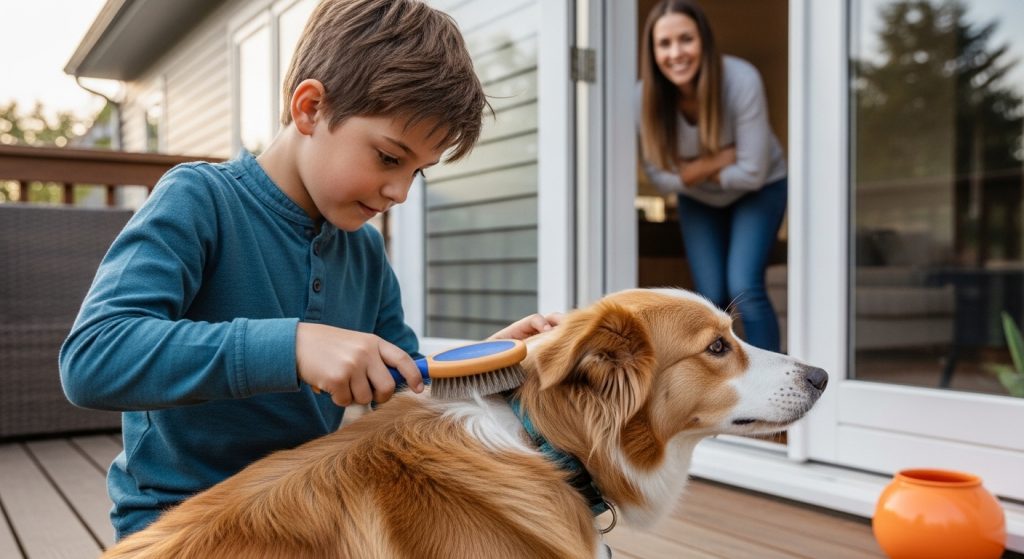
- Young Children (Ages 5-8): Can brush the dog, help with “scooping” (if you’re brave), and participate in short walks with a double-leash system.
- Pre-Teens (Ages 9-12): Can handle feeding schedules, basic obedience training, and neighborhood walks.
- Teenagers (13+): Should be capable of total care, including vet visits (as an observer) and managing exercise needs.
Practical Insights: A Real-World Perspective on Pet Care
As someone who has consulted with dozens of families on integrating pets into the home, I’ve seen one consistent truth: dogs don’t teach responsibility; parents teach responsibility through the dog.
I remember a family, the Miller’s, who adopted a Golden Retriever. Their ten-year-old son promised the world but quit after three days. We shifted the perspective from “chores” to “teamwork.” Instead of saying “Go feed the dog,” we said, “Cooper is hungry and he’s waiting for his teammate.” This small shift in language turned a boring task into a social obligation.
Pro-Tip: Use a visual “Dog Dashboard.” A simple whiteboard in the kitchen where the child ticks off “Breakfast,” “Fresh Water,” and “PM Walk” provides a sense of accomplishment and prevents “did you feed the dog?” arguments.
The 30-Day “Lead the Pack” Plan
To move from parent-led care to child-led care, follow this structured pet care for kids roadmap. This plan is designed to build habit-forming behaviors without overwhelming the child.
Week 1: Observation and Shadowing
The child shadows you for every pet-related task. They don’t do it alone; they watch how you measure the food, how you check for ticks after a walk, and how you clean the bowls.
- Goal: Understanding the “Why” behind the “How.”
Week 2: Supervised Participation
The child performs the tasks while you stand nearby. You are there to guide, but you keep your hands off. If they forget a step, you ask a question (“Does the bowl look clean enough to eat out of?”) rather than fixing it for them.
- Goal: Building physical competence and confidence.
Week 3: The “Primary Caretaker” Shift
The child is now responsible for initiating the tasks. You don’t remind them. If 6:00 PM rolls around and the dog hasn’t been fed, let the dog’s behavior be the reminder.
- Goal: Shifting the mental load from parent to child.
Week 4: Autonomy and Reward
The child manages the dog’s schedule independently. At the end of the week, have a “Pack Meeting” to celebrate their success. A small reward—like a special toy for the dog that the child gets to pick out—reinforces the positive loop.
- Goal: Solidifying the habit and fostering a sense of pride.
Beyond the Chores: Emotional Responsibility
While feeding and walking are the “hard skills,” dog ownership for children also teaches “soft skills” like emotional regulation and patience.
Patience in Training
Nothing teaches a child patience like trying to teach a puppy to “stay.” It requires calm energy and repetitive effort. When a child successfully trains a dog to do a trick, they aren’t just learning dog handling; they are learning that sustained effort leads to results.
Dealing with Discomfort
Sometimes the dog is muddy. Sometimes it’s raining outside during walk time. Sometimes the dog has an accident on the rug. These moments are “grit-builders.” Learning to care for a pet when it’s not fun is the highest form of responsibility. It teaches kids that commitments don’t end when the fun stops.
Choosing the Right Breed for Success
Not all dogs are created equal when it comes to teaching kids. If you are on a budget or looking for a low-stress entry into pet ownership, consider these factors:
| Breed Type | Why it Works for Kids | Challenge Level |
| Labrador/Golden Retriever | Patient, forgiving, and highly food-motivated (easy to train). | High energy; requires lots of exercise. |
| Beagle | Sturdy, mid-sized, and very social. | Can be stubborn and follow their nose. |
| Standard Poodle | Hypoallergenic and incredibly smart. | Requires professional grooming (extra cost). |
| Older Rescue Dogs | Often already house-trained and have lower energy. | May have unknown history or health issues. |
Low-budget tip: Don’t feel pressured to buy a “designer breed.” Local shelters are full of “ready-to-go” dogs that are often already socialized with children. This also teaches your child the responsibility of compassion and rescue.
Handling Resistance: What to do when they say “No”
It will happen. Your child will be mid-video game or tired from school and refuse to take the dog out. This is the “make or break” moment for teaching responsibility with dogs.
1. Don’t Rescue Them Immediately:
If you immediately do the task for them, you’ve taught them that their “no” results in you taking over. Instead, sit with them and explain the dog’s perspective. “Rex has been waiting all day for this. How would you feel if you had to wait hours for a bathroom break?”
2. Use the “When/Then” Technique:
“When the dog is walked and fed, then you can go back to your screen time.” This makes the dog’s needs a prerequisite for their wants.
3. Evaluate the Workload:
If the resistance is constant, the task might be too big. Scale back. Perhaps they only handle the morning feeding while you handle the evening. Success at a small task is better than failure at a large one.
The Long-Term Impact: From Kids to Capable Adults
The lessons learned over a dog’s water bowl translate directly to the classroom and, eventually, the workplace. A child who understands that their actions (or lack thereof) affect another living being develops a “circular” view of the world. They see the ripple effect of their choices.
Dog ownership for children creates adults who show up on time, who care for their environments, and who understand the value of a job well done. It’s an investment in their character that pays dividends for decades.
Ready to Start Your Journey?
Teaching your child responsibility through a pet is a marathon, not a sprint. It requires your guidance, your patience, and a willingness to let them make mistakes. But when you see your child instinctively check the water bowl or patiently work with a dog on a new command, you’ll know the effort was worth it.
Take the first step today. Sit down with your child and create a “Pet Care Contract.” Define the roles, set the expectations, and begin the 30-day plan.
Would you like me to create a printable “Pet Care Contract” or a daily chore checklist tailored to your dog’s specific breed and your child’s age?



0 Comments