
Most people approach weight loss like a grueling marathon while wearing lead shoes. You cut calories, obsess over macros, and end up “hangry” by 2:00 PM, only to see the scale refuse to budge. Intermittent fasting for beginners offers a different path by changing when you eat rather than just what you eat.
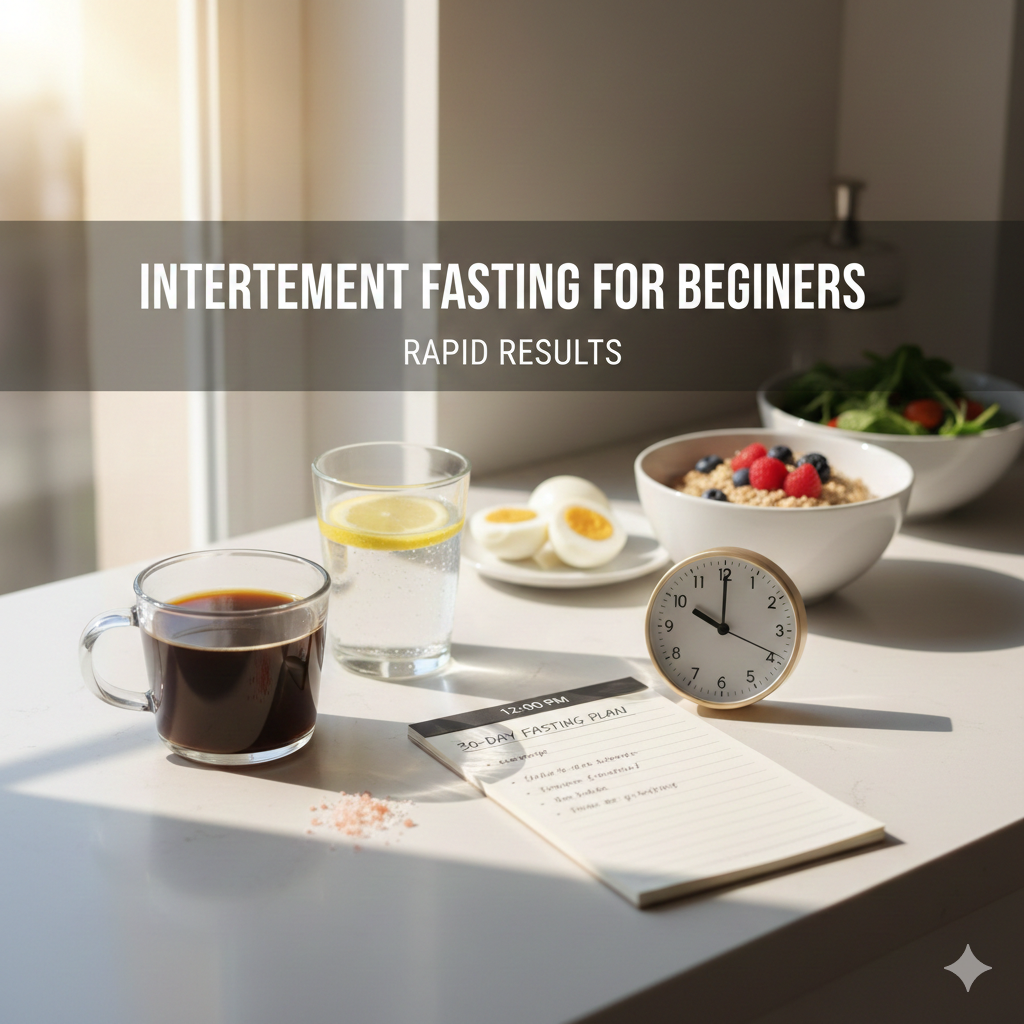
This guide is designed for those who want a low-budget, high-impact lifestyle change without buying expensive supplements or meal kits. We are stripping away the complexity to give you a sustainable blueprint for fat loss and mental clarity.
What you will learn in this guide:
- The science-backed mechanics of how fasting triggers fat burning.
- The most effective schedules for people on a budget.
- A 30-day “No-Fail” Plan to transition from beginner to pro.
- How to avoid the “hidden” mistakes that stall progress for 90% of people.
Why Most Diets Fail and Why Fasting is Different
Standard dieting often forces your body into a “scarcity” mode, which can lead to a sluggish metabolism. When you eat small meals throughout the day, your insulin levels remain elevated, effectively locking the door to your fat stores.
Intermittent fasting for beginners works by keeping insulin low for extended periods. This physiological shift forces your body to reach into its “savings account”—stored body fat—for energy.
It is the ultimate low-budget solution because it actually saves you money on groceries and time on meal prep. You aren’t adding a complex layer to your life; you are simply creating a window of metabolic rest.
Choosing Your Schedule: The Best Entry Points
You don’t need to go 24 hours without food on your first day. Success in time-restricted feeding comes from consistency, not intensity.
1. The 16:8 Method (The Gold Standard)
This involves fasting for 16 hours and eating during an 8-hour window. For most, this looks like finishing dinner by 8:00 PM and not eating again until noon the next day. It is highly effective for weight loss for beginners because it feels like skipping breakfast rather than starving.
2. The 14:10 Method (The “Easy” Start)
If 16 hours feels daunting, start here. A 14-hour fast still provides significant benefits for blood sugar regulation and is a perfect stepping stone for those with high-stress jobs.
3. One Meal a Day (OMAD)
This is an advanced tactic where you eat all your daily calories in a single one-hour window. While powerful for rapid fat loss, it is best reserved for those who have mastered the 16:8 rhythm.
The 30-Day Transition Plan: A Unique Approach
Instead of diving into the deep end, use this phased approach to prime your hormones and prevent the dreaded “fasting flu.”
| Phase | Duration | Focus |
| Phase 1: Adaptation | Days 1–7 | Stop snacking after dinner. Aim for a 12-hour fast. |
| Phase 2: Stretching | Days 8–21 | Move to a 14:10 or 16:8 schedule. Prioritize hydration. |
| Phase 3: Optimization | Days 22–30 | Focus on metabolic flexibility by varying your window. |
During the first week, focus on hydration. Many beginners mistake thirst for hunger; drinking black coffee, plain tea, or water with a pinch of sea salt can kill cravings instantly.
Common Pitfalls: Why You Aren’t Losing Weight
Even with a perfect fasting window, you can stall your progress if you fall into these common traps.
Overeating During the Window
Fasting isn’t a license to eat a day’s worth of junk food in eight hours. To see rapid results, your eating window should focus on whole, satiating foods like eggs, beans, seasonal vegetables, and lean proteins.
Using “Dirty” Fasting Drinks
Many beginners unknowingly break their fast with “sugar-free” creamers or BCAAs. These can trigger an insulin response, halting autophagy and fat burning. Stick to zero-calorie liquids during the fasting period.
Ignoring Electrolytes
When you fast, your kidneys excrete sodium at a higher rate. This leads to headaches and fatigue. A budget-friendly tip is to add a small pinch of Himalayan salt to your water in the morning to maintain your energy levels.
Practical Insights: Real-World Experience
From a clinical and practical standpoint, the biggest hurdle is the social aspect. You will likely face pressure to eat breakfast or join “happy hours” that fall outside your window.
Pro-tip: Shift your window to match your social life. If you have a dinner party on Friday, start your eating window later that day. Fasting should be a tool that serves your life, not a cage that restricts it.
Data shows that those who view fasting as metabolic flexibility—the ability to switch between burning sugar and burning fat—stick with it longer than those who view it as a strict “rule.”
The Budget-Friendly Grocery List for Success
You don’t need “superfoods” to get results. These staples are affordable and keep you full longer:
- Eggs: The perfect protein and fat source.
- Legumes: High fiber to prevent hunger spikes.
- Cruciferous Veggies: Broccoli and cabbage provide volume for very few calories.
- Generic Oats: Great for breaking a fast with complex carbs.
Summary: Your Path to a Leaner You
Intermittent fasting for beginners is the most potent, cost-effective tool available for transforming your health. By controlling your insulin and giving your digestive system a break, you unlock rapid results that traditional dieting can’t match.
The key is to start small, stay hydrated, and be patient with your body as it learns to burn fat for fuel. You don’t need a gym membership or a nutritionist to start today—you just need a clock and a plan.
Ready to start your journey? Choose your fasting window today and commit to just seven days. You’ll be amazed at how quickly your brain fog lifts and your clothes start to fit differently.



0 Comments