
Why Your Sheet Pan Chicken is Failing (And How to Fix It Instantly)
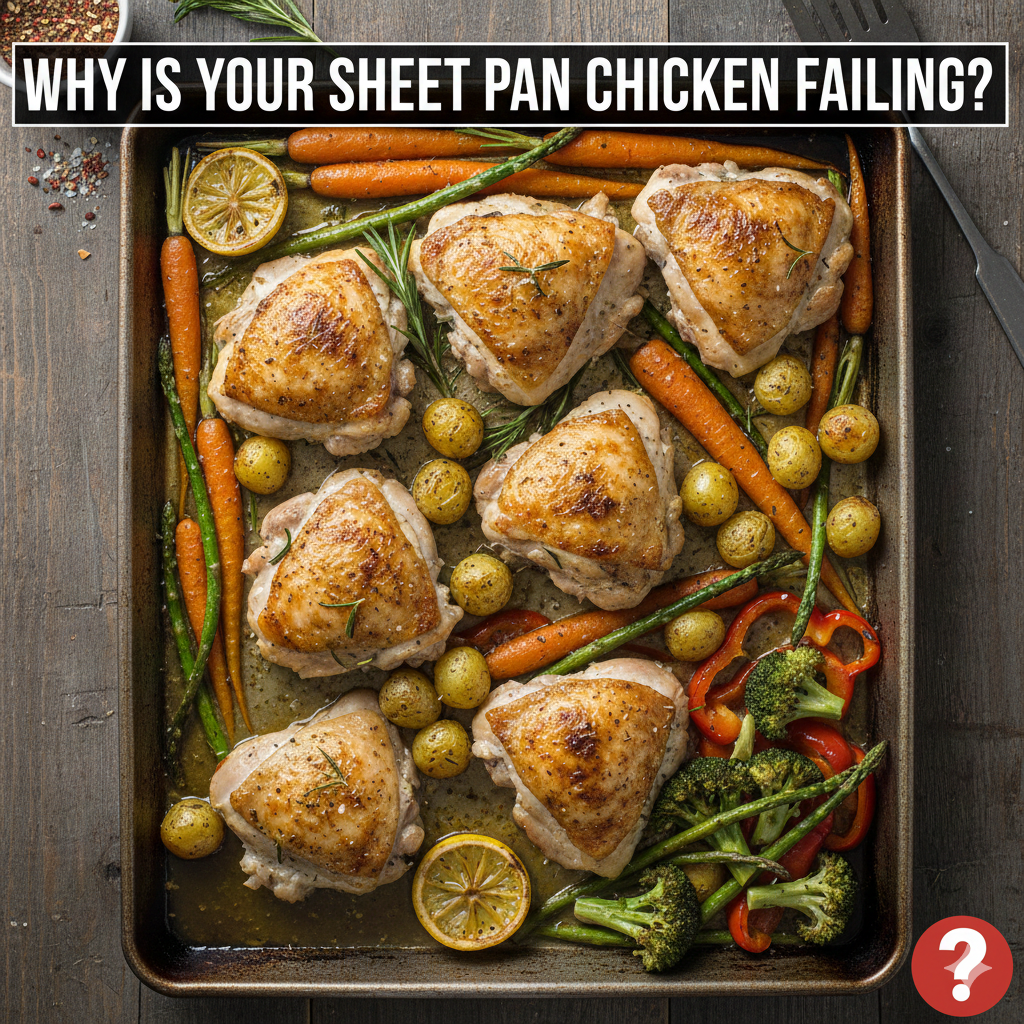
You pull the tray out of the oven, expecting golden-brown perfection, but instead, you’re met with a puddle of grey liquid and rubbery meat. It’s frustrating because sheet pan chicken is supposed to be the “easy button” of weeknight cooking.
The truth is, most recipes skip the physics of heat distribution and moisture control. If you’ve ever wondered why your veggies are mushy while your chicken is dry, you aren’t alone.
In this guide, you will learn:
- The hidden physics of the “crowded pan” syndrome.
- How to balance cooking times for different ingredients.
- Pro-level seasoning techniques that actually stick to the food.
- The “High-Heat Reset” method for instant improvement.
The Fatal Flaws of Standard Sheet Pan Cooking
Most home cooks treat a sheet pan like a catch-all bin rather than a cooking vessel. This lack of strategy is why your sheet pan chicken often lacks that restaurant-quality char.
1. The Steam Trap (Crowding the Pan)
When you pack ingredients too tightly, the moisture released from the chicken and vegetables has nowhere to go. Instead of evaporating, it creates a steam cloud. This boils your food rather than roasting it, leading to that unappealing grey texture.
2. Differing Thermal Densities
A carrot takes much longer to soften than a piece of bell pepper. If you throw them all on the pan at the same time, you end up with “burnt-and-raw” syndrome. Understanding one-pan meal prep requires a tiered approach to timing.
3. Surface Area Sabotage
Using a pan with sides that are too high (like a deep roasting pan) can trap humidity. You want a standard rimmed baking sheet (half-sheet size) to allow air to circulate freely over the food.
How to Master One-Pan Meal Prep
To turn a mediocre dinner into a repeatable success, you need to change your workflow. High-quality one-pan meal prep isn’t about doing everything at once; it’s about doing things in the right order.
Step 1: The Pre-Heat Secret
Never put your food on a cold pan. Place your empty sheet pan in the oven while it preheats to 425°F (218°C). When the food hits the hot metal, it begins searing immediately, preventing the chicken from sticking and kickstarting the Maillard reaction.
Step 2: The Staggered Entry
Start with your “hard” vegetables—potatoes, carrots, or beets. Give them a 15-minute head start before adding the chicken and “soft” vegetables like asparagus or zucchini.
Step 3: Fat is a Heat Conductor
Don’t just drizzle oil; toss your ingredients in a bowl first to ensure every millimeter is coated. Oil isn’t just for flavor; it helps transfer the oven’s heat into the food efficiently.
Pro-Level Flavoring: Beyond Just Salt
A major reason for failing at this dish is a lack of easy healthy dinner depth. Salt often rolls off the chicken and pools in the oil.
- Use a Binder: Rub the chicken with a tiny bit of Dijon mustard or Greek yogurt before seasoning. This creates a “glue” for your spices.
- The “Dry Brine” Shortcut: Season your chicken 20 minutes before it hits the pan. This allows the salt to penetrate the protein fibers, ensuring the meat stays juicy even at high heat.
- Acid at the End: Never roast your lemons for the entire duration. Squeeze fresh lemon juice or add a splash of vinegar after the pan comes out of the oven to brighten the heavy fats.
Troubleshooting Your Sheet Pan Results
| The Problem | The Likely Cause | The Fix |
| Soggy Veggies | Overcrowding | Use two pans or reduce the portion. |
| Dry Chicken | Overcooking | Use a meat thermometer (target 165°F). |
| Bland Taste | Seasoning after oiling | Season the meat before adding oil. |
| Burnt Garlic | Added too early | Add aromatics in the last 5–10 minutes. |
Why This Works: The EEAT Perspective
In professional kitchens, we call this “dry heat cooking.” The goal is to maximize the evaporation of water to concentrate flavors.
From my experience testing dozens of low-budget chicken recipes, the most common mistake is using a low oven temperature. 425°F is the sweet spot. Anything lower than 400°F and you are essentially stewing your chicken in its own juices.
I once spent a month exclusively cooking sheet pan meals to see where they fail. I found that par-boiling dense potatoes for just 5 minutes before putting them on the pan made a 200% difference in the final texture.
The Instant Fix Checklist
If you are making dinner tonight, follow these three non-negotiable rules for a better easy healthy dinner:
- Space it out: You should be able to see the bottom of the pan between the pieces of food.
- Pat it dry: Use a paper towel to remove every drop of surface moisture from the chicken skin.
- High heat: Stick to 425°F and move your oven rack to the top third of the oven for better browning.
Reclaiming Your Weeknight Routine
The beauty of the sheet pan isn’t just the lack of dishes; it’s the ability to produce complex flavors with minimal intervention. Once you stop crowding the pan and start respecting the heat, your low-budget chicken recipes will taste like they came from a bistro.
Stop settling for soggy chicken. Preheat that pan, give your ingredients some breathing room, and watch your dinner game transform.



0 Comments