
Is Multiverse Theories Worth the Hype? An Unfiltered Movie Review
We are suffering from portal fatigue.
Between the MCU’s endless phases and the Oscar-sweeping success of Everything Everywhere All At Once, the “multiverse” concept has gone from a niche sci-fi trope to a mainstream headache. Studios usually throw $200 million at the screen, hoping CGI cameos will distract us from a weak script.
Then comes Multiverse Theories.
This indie darling has been tearing up the festival circuit, generating whispers that it does for quantum mechanics what Primer did for time travel. But does it actually hold up? Or is it just another pretender trying to ride the coattails of a dying trend?
Here is what you will learn in this review:
- How the film handles complex physics on a micro-budget.
- Why the “stakes” feel higher here than in blockbuster films.
- A breakdown of the cinematography and acting performance.
- Whether you should stream it, skip it, or buy the Blu-ray.
What is Multiverse Theories Actually About?
Before we dissect the quality, let’s set the stage.
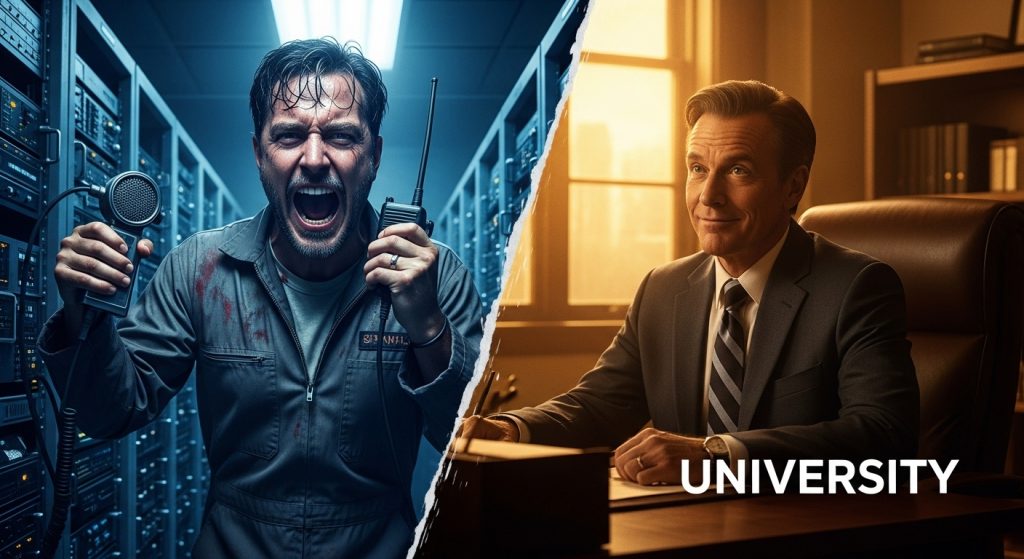
The film follows Elias, a disgraced theoretical physicist working as a late-night janitor at the university that fired him. He isn’t trying to save the world. He isn’t fighting a purple alien warlord. He just wants to find his missing daughter.
Using a stolen server and a modified ham radio, Elias accidentally bridges a connection with a version of himself from a reality where his daughter never vanished.
The premise sounds simple. That is exactly why it works.
Instead of expanding outward into infinite worlds, the movie collapses inward. It focuses entirely on one room, two voices, and the terrifying psychological toll of knowing a “better you” exists.
Multiverse Theories Movie Review: Why Less is More
When looking at this Multiverse Theories movie review, we have to talk about the budget.
This film reportedly cost less than the catering budget for Doctor Strange. Yet, it looks incredible. The director utilizes claustrophobic framing and practical lighting to sell the sci-fi elements. There are no green screens here.
The “Analog” Aesthetic
The film relies on sound design rather than visual spectacle.
When the multiverse “tears,” you don’t see a swirling vortex. You hear a sickening tear in the audio frequency. The hum of the servers gets louder. The shadows in the room detach from the objects casting them.
This tactile approach grounds the story. It forces the audience to lean in, creating a sense of dread that CGI simply cannot replicate.
A Masterclass in Acting
The lead actor carries the entire 105-minute runtime almost solo.
Acting against a radio recording of your own voice is a technical nightmare. Yet, the distinct personality shifts between “Janitor Elias” (broken, cynical) and “Professor Elias” (arrogant, successful) are subtle but distinct.
You forget you are watching one actor. You believe it is two men fighting for dominance over a single life.
Common Mistakes Multiverse Movies Make (And How This Avoids Them)
Most modern sci-fi films fail the “Multiverse Test.”
The problem with infinite universes is that they lower the stakes. If a character dies, you can just grab a replacement from Earth-838. Nothing matters because everything is replaceable.
Multiverse Theories flips this trope on its head.
1. The “Conservation of Energy” Rule
The script introduces a hard rule early on: Information cannot be created or destroyed, only exchanged.
For Elias to pull his daughter from the other timeline, he has to trade something of equal value. The film becomes a negotiation. It’s not an action movie; it’s a hostage thriller where the hostage taker is physics itself.
2. No Cameo Bait
You won’t see familiar faces popping up for fan service.
The film refuses to look outside its own narrative. It stays disciplined. This focus allows the emotional core—a father’s grief—to remain the priority. You aren’t scanning the background for easter eggs; you are watching a man fall apart.
The Technical Breakdown: A Filmmaker’s Perspective
As someone who has analyzed script structures for years, the pacing here is fascinating.
Most three-act structures in sci-fi follow a predictable path: Discovery, Experimentation, Chaos, Resolution.
Multiverse Theories skips the “Experimentation” phase almost entirely. It throws Elias straight into the Chaos. This creates a breathless anxiety that lasts from minute 15 until the credits roll.
Cinematography and Color Grading
The color palette is deliberately washed out.
The “Prime” universe is graded in cold blues and grays, emphasizing Elias’s depression. As the connection to the other timeline strengthens, warm sodium-vapor oranges start to bleed into the frame.
It is a simple visual cue, but it guides the audience subconsciously. It tells the story of hope invading a hopeless space without a single line of dialogue.
Is It Flawless? (The Criticism)
No movie is perfect.
The third act gets messy. The script introduces a secondary antagonist—a university dean suspicious of Elias—that feels unnecessary. It adds external tension to a story that was thriving on internal conflict.
Additionally, the sound mixing in the climax is aggressive. If you are watching this without subtitles, you might miss a crucial line of dialogue over the droning synth score.
However, these are minor gripes in an otherwise tight production.
Final Verdict: Is It Worth Your Time?
If you are looking for laser beams and spandex, look elsewhere.
But if you are a fan of Coherence, The Man from Earth, or Arrival, this movie was made for you. It respects your intelligence. It asks you to keep up with the science without holding your hand, and it rewards you with an ending that will leave you staring at a blank screen for ten minutes.
Multiverse Theories proves that you don’t need a massive budget to explore massive concepts. You just need a good script and the courage to keep it small.
Rating: 4.5/5 Stars
Quick Summary
- Best Feature: The chemistry the lead actor has with himself.
- Worst Feature: The forced subplot with the Dean.
- Watch if you like: Primer, Coherence, Dark (TV Series).
Ready to watch?
Don’t wait for the streaming algorithm to bury it. Seek this one out on VOD platforms now before the inevitable, watered-down Hollywood remake gets announced.



0 Comments