
The Future of Generative AI: How It Will Change Everything by 2030
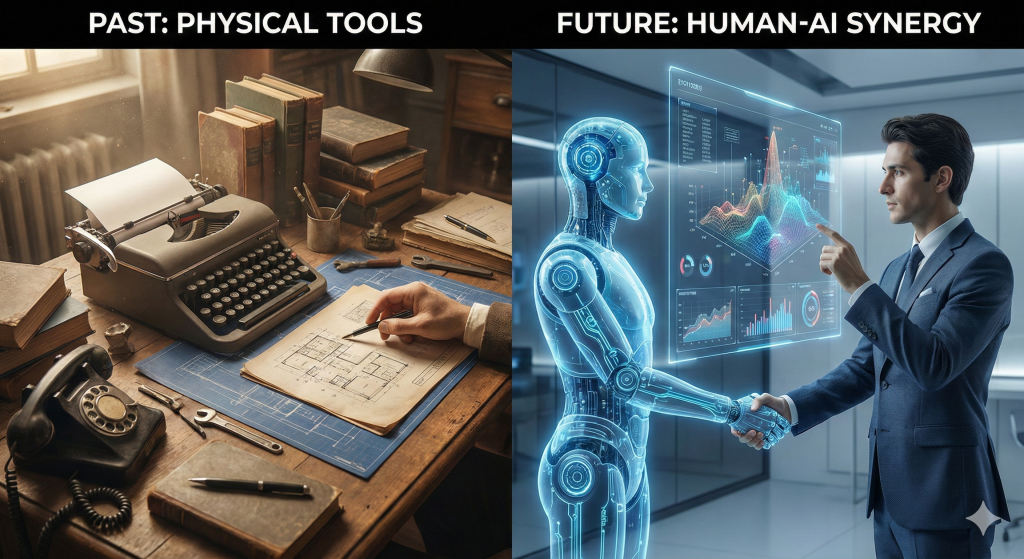
Imagine spending four hours struggling with a spreadsheet, only to realize a single prompt could have finished it in seconds. This isn’t just a productivity hack; it’s a symptom of the massive shift we’re living through. Most people are currently using AI as a toy, but by 2030, Generative AI will be the invisible engine powering every aspect of your professional and personal life.
In this guide, you’ll learn:
- How AI moves from “chatting” to “doing” via autonomous agents.
- The shift from generic content to hyper-personalized digital environments.
- A practical roadmap to stay relevant as the job market evolves.
- Why the “human-in-the-loop” model is your greatest competitive advantage.
Beyond the Chatbot: The Rise of Agentic AI
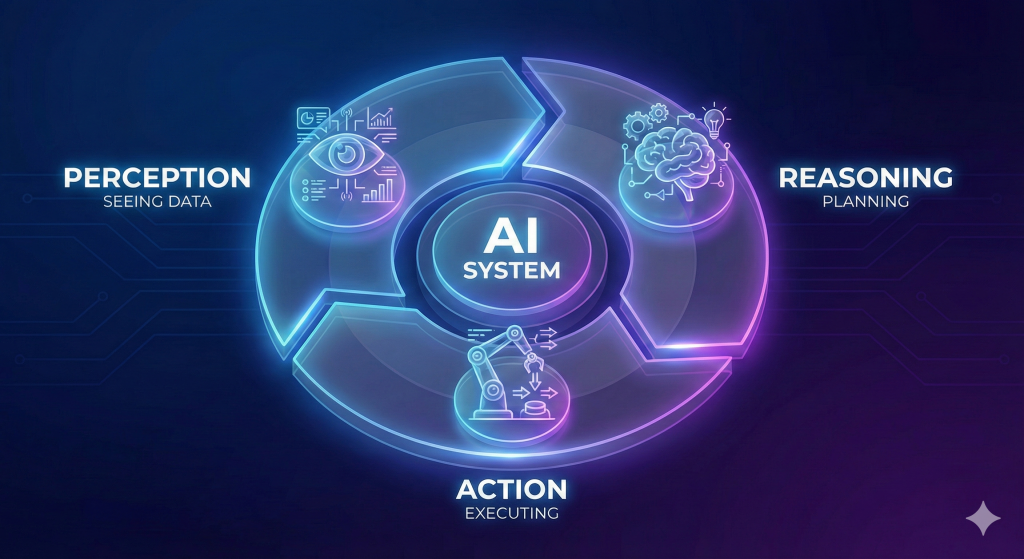
By 2030, the phrase “prompt engineering” will feel as dated as “dialing into the internet.” We are moving away from simple text generation and toward AI Agents—systems that don’t just talk about tasks but execute them from start to finish.
Current Generative AI requires you to hold its hand through every step. By the end of this decade, you will give a high-level goal, such as “Plan and book a 10-day eco-friendly trip to Japan within a $5,000 budget,” and the AI will handle the research, booking, and itinerary management autonomously. This shift from passive tools to active collaborators is the defining characteristic of the next five years.
The Integration of Multimodal Intelligence
We are already seeing the birth of models that “see,” “hear,” and “speak” simultaneously. By 2030, multimodal AI will be the standard, allowing for real-time translation of body language during negotiations or instant architectural rendering based on a hand-drawn sketch. This isn’t just about convenience; it’s about breaking down the barriers between human intent and digital execution.
Transforming Industries: From Healthcare to Education
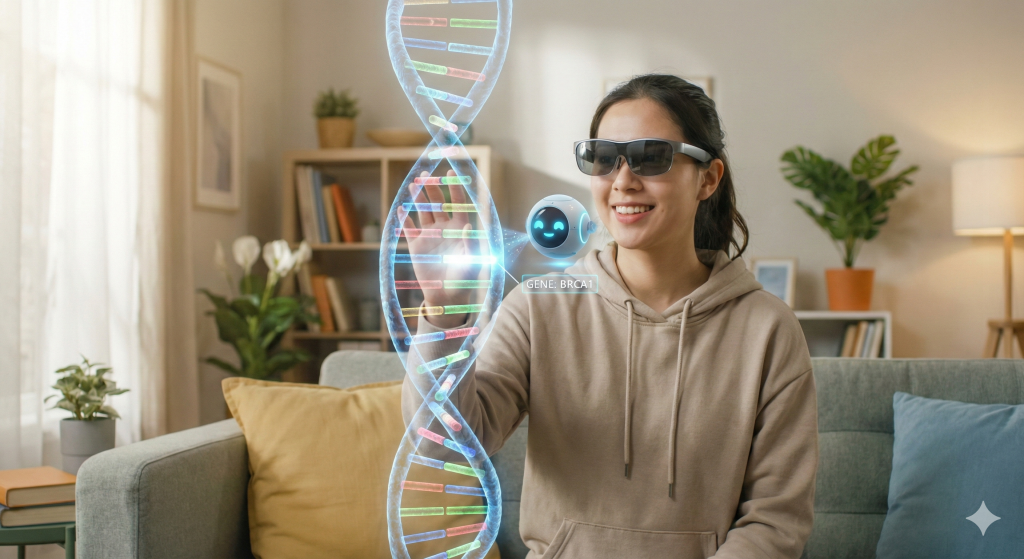
The impact of Generative AI won’t be confined to Silicon Valley. It is set to overhaul legacy industries that have remained stagnant for decades.
Hyper-Personalized Learning
Education is currently a “one-size-fits-all” model. By 2030, every student will have a personal AI tutor that adapts to their specific learning speed, interests, and neurodiversity. If a child learns better through visual storytelling than rote memorization, the AI will rewrite the entire physics curriculum into an interactive graphic novel in real-time.
The Democratization of Creative Production
We are entering an era of “Prosumerism” where the gap between an idea and a finished product is near zero.
- Film: A single creator will be able to generate a feature-length, high-definition movie from a script.
- Software: Coding will become a linguistic skill rather than a mathematical one, as AI-driven development handles the syntax.
- Music: Personalized soundtracks will be generated on the fly, adjusting their tempo and mood based on your biometric data (heart rate or stress levels).
The Workforce Evolution: Why “Human Skills” Matter More Than Ever

A common fear is that Generative AI will replace human workers. While certain tasks will disappear, the demand for human judgment, empathy, and strategic oversight will skyrocket.
The Shift in Value Proportions
In the past, 80% of work was execution and 20% was strategy. By 2030, those numbers will flip. Your value will no longer lie in your ability to write a report or design a logo, but in your ability to curate, verify, and direct AI outputs.
Expert Insight: The most successful professionals in 2030 won’t be the ones who know how to code the best; they will be the ones who know how to ask the best questions and audit the AI’s ethics and accuracy.
New Roles in the AI Economy
- AI Ethicists & Auditors: Ensuring models operate without bias and within legal frameworks.
- Context Designers: Professionals who specialize in feeding AI the right cultural and situational data to ensure relevant outputs.
- Human-AI Interaction Specialists: Experts who optimize the workflow between biological and artificial intelligence.
Real-World Experience: The “Action Over Theory” Approach
As a strategist in the Science & Tech space, I’ve seen firsthand that the “wait and see” approach is a career killer. I recently worked with a small marketing firm that replaced their traditional “brainstorming” phase with an AI-augmented workflow.
They didn’t fire anyone. Instead, they used the time saved to double their client load while increasing the creative quality of their campaigns. This is the practical application of AI: it’s a force multiplier, not a replacement.
Common Mistakes to Avoid by 2030
- Over-reliance on “Raw” Output: AI outputs in 2030 will be polished, but they can still be confidently wrong. Never skip the human verification layer.
- Ignoring Data Privacy: As AI becomes more integrated, protecting your proprietary “human” data will be your most important security task.
- Failing to Upskill: Thinking AI is “just a phase” is equivalent to thinking the internet was just a fad in 1995.
Ethical Frontiers and the “Reality Gap”
As Generative AI becomes more capable of creating hyper-realistic deepfakes and synthetic media, the concept of “truth” will be challenged. By 2030, we will likely see the widespread adoption of digital watermarking and blockchain-based content verification.
We must move toward a future of Responsible AI. This means building systems that are transparent, explainable, and aligned with human values. The goal isn’t just to make AI smarter, but to make it a more reliable partner in solving global challenges like climate change and disease.
Preparing for 2030: Your 3-Step Strategy
You don’t need a PhD in Computer Science to thrive in the next decade. You just need a strategy.
- Experiment Weekly: Spend 30 minutes every week testing a new AI tool outside of your comfort zone.
- Focus on “Soft” Skills: Double down on communication, emotional intelligence, and leadership—the areas where AI still struggles.
- Build Your “Digital Twin”: Start organizing your knowledge and workflows so they can be easily integrated with future personal AI assistants.
The future of Generative AI isn’t about machines taking over the world. It’s about humans finally having the tools to solve the problems we’ve been too busy or too tired to tackle.



0 Comments