
The Ultimate Guide to Losing Weight Without Counting Calories
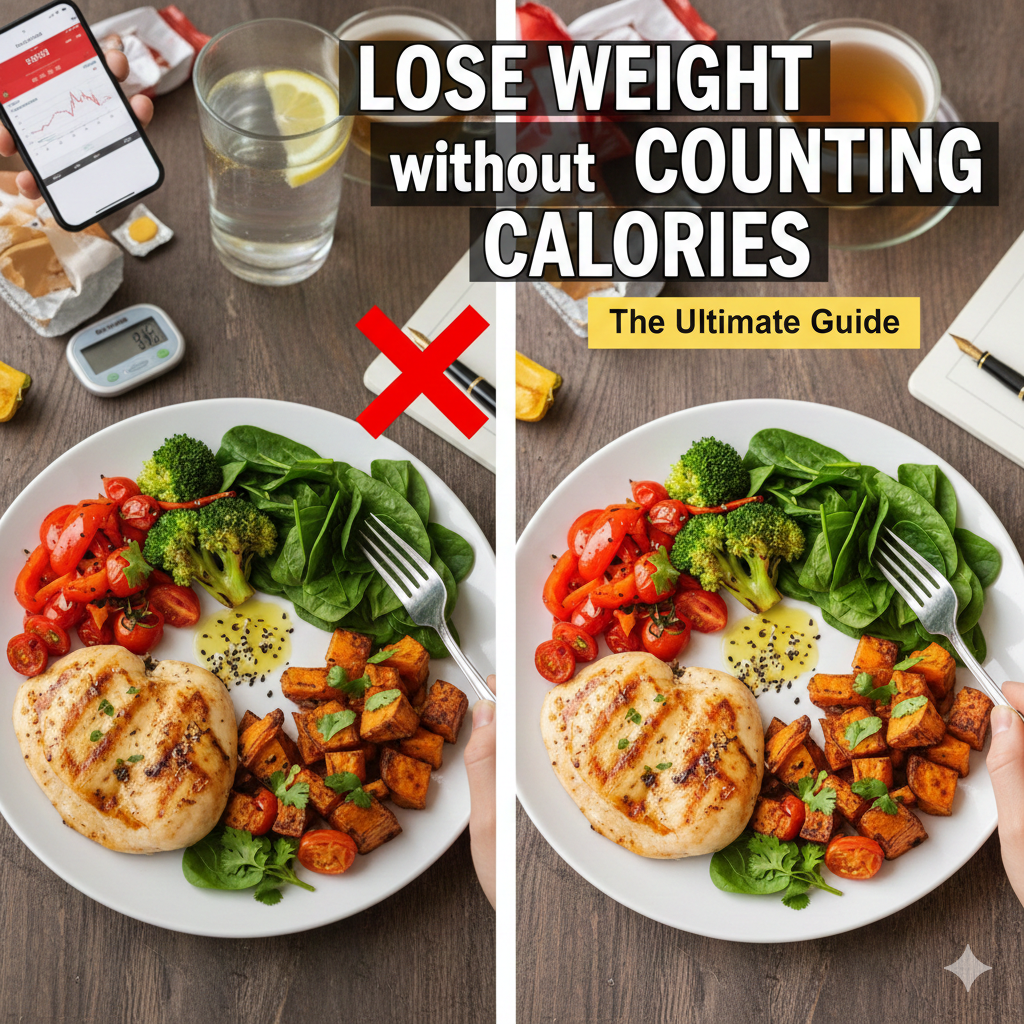
You’ve likely been there: staring at a barcode in the grocery store, frantically logging three almonds into an app, and feeling like a failure because you went 50 calories over a numerical limit set by an algorithm. The truth is, calorie counting is often a recipe for burnout and metabolic obsession rather than long-term health. It turns eating—one of life’s greatest pleasures—into a math homework assignment that nobody asked for.
The good news? Your body doesn’t actually need a calculator to regulate its weight; it needs the right signals. By shifting your focus from how much you eat to what and how you eat, you can achieve sustainable fat loss without ever opening a spreadsheet again.
What you will learn in this guide:
- Why biological satiety signals beat digital tracking every time.
- The “Plate Method” for effortless portion control.
- How to master the sustainable weight loss habits that keep the pounds off.
- The psychological shifts needed to stop obsessing over numbers.
Why Calorie Counting Fails for Most People
Calorie counting treats the human body like a simple combustion engine, but we are actually complex chemical laboratories. A 100-calorie pack of processed crackers affects your hormones, blood sugar, and hunger levels very differently than 100 calories of avocado or wild salmon. When you focus solely on the number, you ignore the nutritional density and hormonal impact of your food.
Furthermore, calorie labels on packaging are allowed a 20% margin of error by the FDA. If you are basing your entire progress on data that is inherently imprecise, you’re chasing a ghost. Moving toward losing weight naturally involves trusting your internal cues rather than flawed external data.
The Secret Sauce: High-Satiety Eating
If you want to stop counting, you have to start feeling. Satiety is the feeling of being full and satisfied, and it is governed by hormones like leptin and ghrelin. To lose weight without tracking, you must prioritize foods that “turn off” your hunger switch for hours at a time.
Prioritize Protein First
Protein is the most thermogenic and satiating macronutrient. It requires more energy to digest and significantly reduces the “hunger hormone” ghrelin. Aim for a palm-sized portion of lean protein—like eggs, chicken, lentils, or Greek yogurt—at every single meal.
Fiber: The Internal Volume Knob
Fiber adds bulk to your meals without adding significant energy. It slows down digestion, preventing the insulin spikes that lead to fat storage. Think of fiber as a natural “weight loss hack” that fills your stomach and keeps your gut microbiome happy.
Healthy Fats for Brain Signal
While fat is calorie-dense, it is essential for signaling to your brain that you are no longer hungry. A thumb-sized portion of olive oil, nuts, or seeds provides the sensory satisfaction that prevents late-night snacking.
The “No-Math” Plate Method
Instead of weighing your food, use your eyes and a standard dinner plate. This visual tool ensures you are getting the right balance for sustainable weight loss without the headache of a kitchen scale.
- 50% Non-Starchy Vegetables: Fill half your plate with greens, broccoli, peppers, or cauliflower. These provide volume and nutrients with very little caloric impact.
- 25% High-Quality Protein: This is your foundation for muscle preservation and metabolic health.
- 25% Complex Carbohydrates or Fruit: Think sweet potatoes, quinoa, or berries. These provide the glucose your brain needs without the crash of refined sugars.
- The “Flavor Factor”: Add a small amount of healthy fat (avocado, vinaigrette) to ensure vitamins are absorbed and your taste buds are satisfied.
3 Common Mistakes When Ignoring Calories
Transitioning away from tracking can be scary. To ensure success, avoid these three psychological traps that often stall progress:
1. The “Healthy Food” Halo
Just because a food is “healthy” doesn’t mean it has zero energy. Eating an entire jar of almond butter or six avocados a day will still result in weight gain. Use mindful eating to recognize when you are full, even if there is “good” food left on the plate.
2. Drinking Your Energy
It is incredibly easy to consume 500 calories of juice, soda, or “healthy” smoothies without your brain registering that you’ve “eaten.” To lose weight without counting, stick to water, black coffee, or unsweetened tea. Liquid calories are the ultimate stealth enemy of fat loss.
3. Ignoring Hidden Sugars
Modern food processing hides sugar in everything from salad dressings to pasta sauce. These hidden sugars spike your insulin, which effectively “locks” your fat cells and prevents them from being used for energy. Always read the ingredients list—not just the calorie count.
The Power of Mindful Eating and Habit Stacking
Weight loss isn’t just about what’s on the fork; it’s about the environment in which you eat. Most people overeat because they are distracted, stressed, or eating out of boredom.
- Eat Without Screens: When you watch TV while eating, your brain misses the “fullness” signals from your stomach. Try eating in silence or with a conversation for at least one meal a day.
- The 20-Minute Rule: It takes about 20 minutes for your stomach to tell your brain it’s full. If you finish your plate in five minutes, wait 15 more before deciding if you actually need seconds.
- Sleep and Stress Management: If you are sleep-deprived, your body will crave quick energy (sugar). High cortisol from stress also encourages abdominal fat storage. Sometimes the best “diet” move is an extra hour of sleep.
A 30-Day “Non-Counting” Action Plan
If you’re ready to ditch the apps, follow this simple progression over the next month:
| Week | Focus Area | Goal |
| Week 1 | Hydration & Protein | Drink 2L of water and have protein at every breakfast. |
| Week 2 | The Half-Plate Rule | Ensure 50% of every lunch and dinner is green vegetables. |
| Week 3 | Mindful Mechanics | Chew each bite 20 times and put the fork down between bites. |
| Week 4 | Eliminate Liquid Calories | Replace all sodas and juices with sparkling water or tea. |
Expert Insights: The Biology of Why This Works
From a clinical perspective, weight loss strategies that don’t rely on tracking work because they lower the “Body Weight Set Point.” This is the weight your brain thinks you should be. By reducing processed foods and increasing fiber and protein, you lower inflammation and improve insulin sensitivity.
When your hormones are balanced, your body naturally wants to burn stored fat rather than hoarding it. This is a much more permanent solution than the “willpower-based” restriction required for strict calorie counting, which almost always results in the weight being regained once the tracking stops.
Summary and Next Steps
Losing weight doesn’t have to be a math problem. By prioritizing satiety-heavy foods, using the Plate Method, and practicing mindful eating, you can reclaim your relationship with food and achieve your goals. Remember, the best diet is the one you can actually stick to for the rest of your life.
Ready to start your journey?
Pick one meal today—just one—and try to make it 50% vegetables and 25% protein. See how much longer you stay full compared to your usual routine.



0 Comments