
The Secret to the Perfect One-Pan Salmon: A Chef’s Guide for 2026
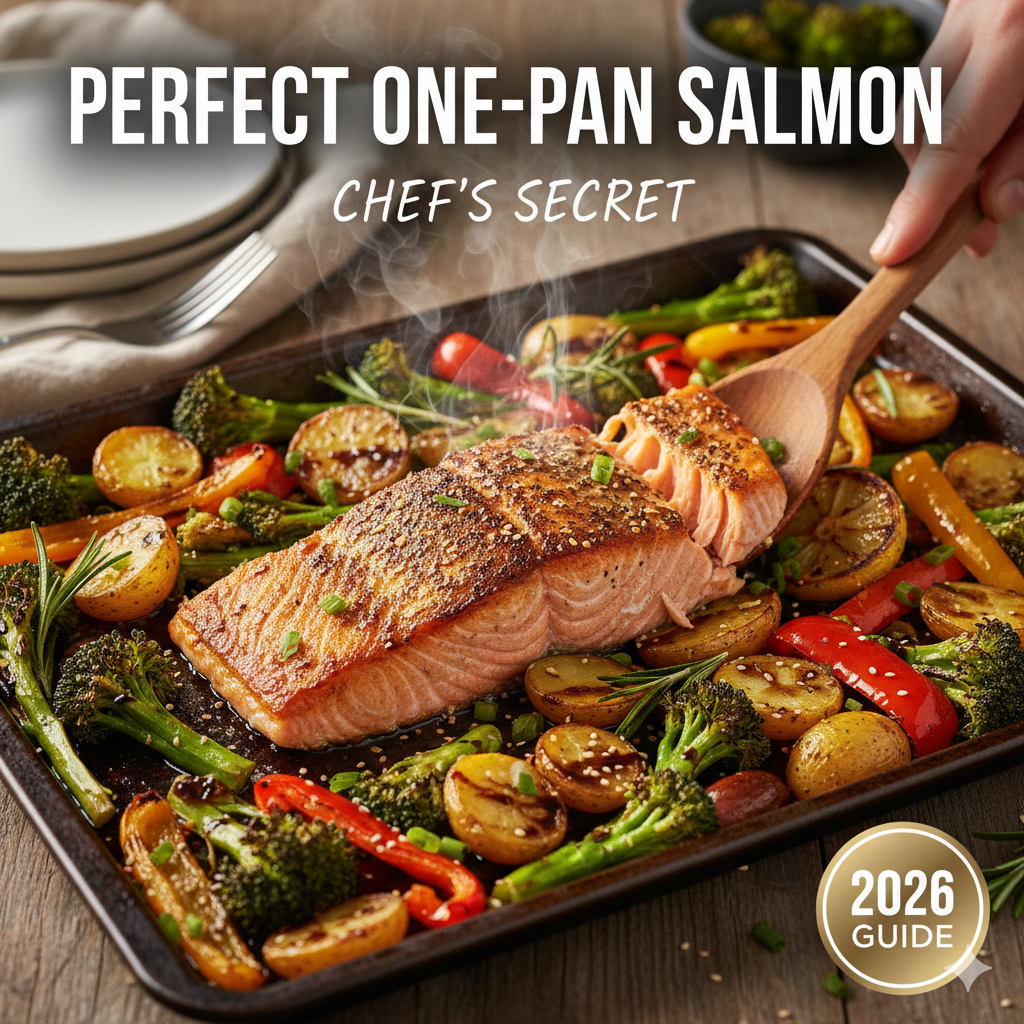
You’ve been there: it’s 6:30 PM, you’re starving, and you have a beautiful piece of fish in the fridge. But the thought of scrubbing three different pans and a grease-splattered stovetop makes you reach for the takeout app instead. Most “easy” recipes fail because they leave out the one thing that matters: the secret to the perfect one-pan salmon isn’t just the fish; it’s the thermal management of your sheet pan.
In this guide, we are stripping away the fluff to master one-pan salmon recipes that actually deliver crispy skin and tender flakes without the mess. You will learn the “Cold Start” tray method, how to time your vegetables so nothing ends up mushy, and the budget-friendly pantry staples that elevate a $10 meal to a $40 bistro experience.
Why Most One-Pan Meals Fail (And How We’re Fixing It)
The biggest lie in home cooking is that you can just throw everything on a tray at once and expect perfection. If you put asparagus and a thick salmon fillet in the oven at the same time, you’ll end up with charred wood for greens or a raw center in your fish.
In 2026, the trend has shifted toward precision minimalist cooking. We aren’t just “dumping and baking”; we are layering ingredients based on their density and water content. This ensures your healthy salmon dinner is nutritionally intact and structurally sound.
The Problem with “The Steam Trap”
When you crowd a pan, the moisture released by vegetables creates steam. This steam prevents the salmon from getting that coveted crust. We solve this by using the staggered entry method, ensuring the “wet” ingredients don’t sabotage your “dry” heat.
The Essentials: What You Need for a Professional Result
You don’t need a $200 copper skillet to pull off one-pan salmon recipes. In fact, a simple, heavy-duty rimmed baking sheet—the kind used in commercial kitchens—is your best friend.
- A Heavy-Gauge Sheet Pan: Thin pans warp under high heat, leading to uneven cooking.
- High-Smoke Point Oil: Forget extra virgin olive oil for the high-heat roast; go with avocado or grapeseed oil.
- The Salmon: Look for “Center-Cut” fillets, as they have a uniform thickness that cooks evenly.
- Parchment Paper: This is non-negotiable for easy cleanup and preventing the skin from sticking to the metal.
The 2026 “Cold-Start” Technique
Standard culinary school advice says to preheat your oven, but for the perfect one-pan salmon, we are flipping the script. Starting your vegetables on a preheated pan while keeping your fish chilled creates a texture contrast that is hard to beat.
Phase 1: The Vegetable Foundation
Choose “high-heat” vegetables like broccoli florets, baby potatoes (halved), or thick-cut bell peppers. Toss them in oil and salt, and get them in a 425°F (220°C) oven for 10-12 minutes before the fish even touches the pan.
Phase 2: The Protein Placement
Once the vegetables are halfway done, move them to the edges of the pan. Place your salmon in the center. This “thermal island” allows the heat to circulate around the fish, ensuring the healthy salmon dinner you’re preparing stays moist.
Flavor Profiles That Work (Without Breaking the Bank)
A easy sheet pan meal doesn’t have to taste like “diet food.” By using acidic elements and umami-rich seasonings, you can create deep flavors in under 20 minutes.
The Mediterranean Minimalist
- Aromatics: Lemon slices, smashed garlic cloves, and dried oregano.
- Veggie Pairing: Cherry tomatoes and zucchini.
- The Finish: A drizzle of balsamic glaze after it leaves the oven.
The Miso-Maple Glaze
- Aromatics: Grated ginger and a splash of soy sauce.
- Veggie Pairing: Bok choy and snap peas.
- The Finish: Toasted sesame seeds and scallions.
The Science of “Done-ness”
Professional chefs don’t guess. If you want to master one-pan salmon recipes, you need to understand the internal temperature stages. Salmon is a delicate protein with very little connective tissue.
| Internal Temp | Texture Description | Chef’s Verdict |
|---|---|---|
| 115°F – 120°F | Translucent, very soft | Rare (Sushi style) |
| 125°F – 130°F | Flaky but moist, bright pink | Perfect Medium-Rare |
| 135°F – 140°F | Firm, lighter pink, “chalky” | Well-Done (Borderline dry) |
Pro Tip: Remove the salmon from the oven when it hits 125°F. Carry-over cooking will bring it to the perfect 130°F while it rests on your plate.
Common Mistakes to Avoid
Even seasoned home cooks trip up on these three common errors. Avoiding these will immediately put you ahead of 90% of the recipes you find on social media.
1. Washing Your Fish
Stop rinsing your salmon in the sink. It doesn’t “clean” the fish; it just spreads bacteria and makes the surface wet, which prevents browning. Pat it dry with a paper towel instead.
2. Ignoring the “Skin-Side” Rule
Always start your salmon skin-side down on the pan. The skin acts as a heat shield for the delicate flesh, preventing it from overcooking while the fat renders into a crispy layer.
3. Over-crowding the Sheet
If your vegetables are touching each other, they are steaming, not roasting. Use two pans if you have to. A crowded pan is the enemy of the easy sheet pan meal.
Scaling This for a Busy Week (Meal Prep 2.0)
If you are a beginner looking for low-budget solutions, the one-pan method is your ultimate weapon. You can prep “kits” in advance.
- Sunday Prep: Chop your hardy vegetables and store them in dry containers.
- The Sauce: Mix your seasonings in a small jar.
- The Execution: On Tuesday night, you are simply “assembling” rather than “cooking.”
This approach turns a stressful evening into a 15-minute victory. You’re saving money by not ordering out and eating a healthy salmon dinner that actually tastes good.
Experience-Backed Insights: The “Spoon Test”
As a chef, I’ve cooked thousands of fillets. If you don’t have a thermometer, use the Spoon Test. Gently press the back of a spoon against the thickest part of the fillet. If the flakes begin to separate (or “give”) easily, it’s done. If it feels bouncy or firm, it needs two more minutes.
Remember, salmon quality matters, but technique matters more. Even a budget-friendly frozen fillet can taste like a million dollars if you respect the temperature and the timing.
Summary of the Perfect One-Pan Method
The secret to the perfect one-pan salmon is a combination of dry surfaces, staggered cooking times, and high-heat roasting. By starting your vegetables first and using a heavy-gauge pan, you eliminate the soggy textures that plague most home-cooked fish.
Mastering this one technique gives you the freedom to swap flavors, vegetables, and seasonings every week without ever needing a new recipe book. It’s the ultimate ROI for your kitchen time.
Ready to try it tonight? Grab a sheet pan, some seasonal greens, and a fresh fillet. Once you see those crispy edges and flaky center, you’ll never go back to washing five pots for one meal again.



0 Comments