
10 Hooking Your Audience Secrets Every Creator Needs to Know
You have exactly three seconds.
That is the harsh reality of content creation today. Whether you are filming on an iPhone in your bedroom or using a cinema camera in a studio, the game is won or lost in those first few moments. If you aren’t using effective video hooks, your audience is gone before you even introduce yourself.
I’ve audited hundreds of channels where the creator had brilliant information, but nobody stuck around to hear it. Why? Because they treated the intro like a college lecture instead of a movie trailer.
You don’t need a Hollywood budget to fix this. You need to understand human psychology.
In this guide, we are going to break down the specific, low-budget strategies that actually drive retention. We aren’t just listing tips; we are looking at the why and the how so you can stop the scroll every single time.
What You Will Learn
- Why the “Pattern Interrupt” is your best friend.
- How to use audio to hook viewers before they see a thing.
- The “Curiosity Gap” technique used by top YouTubers.
- A real-world breakdown of a retention recovery strategy.
1. The “Pattern Interrupt” (Visual Shock)
Most users consume content in a zombie-like trance. They are scrolling through a feed that looks largely the same: talking heads, dancing teenagers, or static images.
Your first job is to break that trance.
A pattern interrupt is a sudden change in movement or visual stimulus that forces the brain to pay attention. You don’t need fancy VFX for this.
How to do it on a budget:
- Physical Movement: Don’t start your video sitting still. Walk into the frame, drop an object on the table, or open a door.
- Scale Change: Start with the camera extremely close to the subject (macro shot) and pull back, or vice versa.
- Lighting Shift: Turn a light on as the record button hits.
The goal is simply to signal to the viewer’s brain: Something different is happening here.
2. The “In Media Res” Opening
One of the biggest mistakes beginners make is the “warm-up.”
They say, “Hi guys, welcome back to the channel, today we are going to talk about…”
Stop doing this. It kills your audience retention.
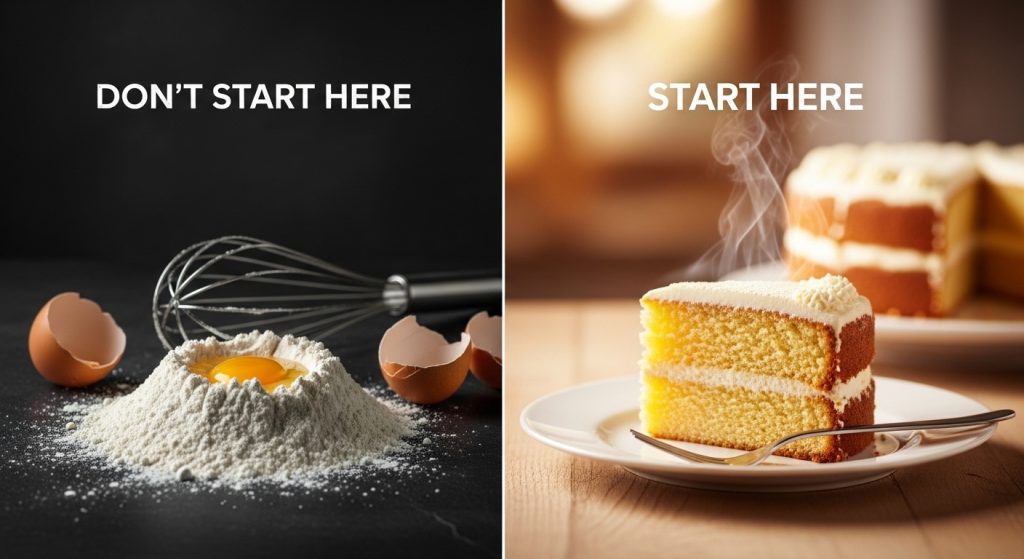
“In Media Res” is Latin for “in the middle of things.” Start your video at the climax of the action or the most emotional part of the story.
The Fix:
If you are making a cooking video, don’t start with the ingredients. Start with the finished dish coming out of the oven, steaming and delicious. Then cut back to the beginning to show how you got there. Give them the destination first; make them watch to find the map.
3. The Negative Promise
Positive promises are great (“I will teach you to get rich”), but negative promises are biologically more potent. Humans are wired to avoid pain more than they are wired to seek gain.
This is often called “Loss Aversion” in psychology.
Instead of saying, “Here is how to improve your lighting,” try: “This lighting mistake is making your videos look amateur.”
Why this works:
- It creates immediate urgency.
- It triggers a “fear of missing out” (FOMO) on critical knowledge.
- It positions you as the protector against failure.
Use this carefully. You don’t want to be click-baity, but you do want to highlight the stakes of not watching.
4. The Audio Hook (The Invisible Grip)
We obsess over cameras, but audio is often what makes people stop scrolling.
On platforms like TikTok or Instagram Reels, a trending sound is a hook in itself. But for long-form content, sound design is the secret weapon of top creators.
Low-budget audio hacks:
- The Clap/Snap: Start the video with a sharp sound synced to a cut.
- ASMR triggers: The sound of a package opening, a drink pouring, or typing.
- Silence: In a loud feed, total silence for the first two seconds can be deafeningly loud.
If your video starts with 3 seconds of dead air or hiss, you lose. If it starts with a deliberate sonic cue, you win.
5. The Curiosity Gap
This is the bread and butter of viral journalism, but it applies perfectly to video hooks.
The curiosity gap is the space between what the viewer knows and what they want to know. You must open a loop in their brain that can only be closed by watching the video.
Examples of the Gap:
- “Everyone thinks [X] is the best camera, but I found something better for half the price.” (What is it?)
- “I tried the 30-day pushup challenge, and the results were not what I expected.” (What were they?)
Never give the answer in the first sentence. State the premise, tease the outcome, and make them wait for the resolution.
6. Text Overlay Interceptors
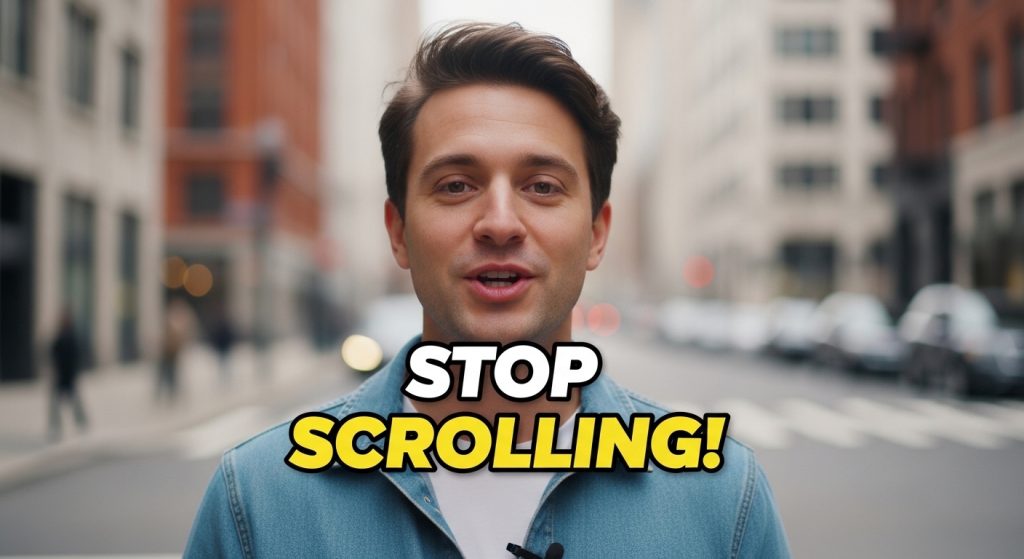
Many people watch videos on mute, especially in public spaces. If you rely solely on your voice to hook them, you are ignoring 40% of your potential audience.
You need “Text Overlay Interceptors.” These are bold, punchy titles that appear on screen the moment the video starts.
Best Practices:
- Keep it short: Max 3-5 words.
- Contrast is key: Use bright colors like yellow or cyan against dark backgrounds.
- Don’t repeat the title: If your video title is “How to Bake Cake,” your overlay should say “Stop Baking Like This!”
Treat your first frame like a billboard. It needs to be readable at 60mph.
7. The “Prop” Strategy
Talking heads are boring. I love a good monologue, but visually, a person standing against a wall is low-stimulation.
Introduce a prop immediately.
If you are talking about finance, hold a stack of cash or a credit card. If you are talking about fitness, hold a dumbbell.
Why props increase retention:
- They give the viewer’s eyes something to track.
- They make abstract concepts (like debt) concrete (cutting up a credit card).
- They signal authority (you have the tools of the trade).
You don’t need to buy new gear. Use what is in your room. It grounds your video in reality.
8. High-Tempo Pacing (The First 30 Seconds)
You can slow down later. But in the beginning, your editing pace needs to be rapid.
A common rule of thumb for YouTube growth is to change the frame every 3 to 5 seconds during the intro.
Budget-friendly editing tricks:
- Jump Cuts: Remove all breaths and “ums.”
- Zoom Cuts: Punch in 10% on the video digitally for emphasis, then punch back out.
- B-Roll flashes: Show 3 images in rapid succession to match your narration.
This tempo signals high energy and high value. It tells the viewer, “I am not going to waste your time.”
9. The “Us vs. Them” Narrative
Tribalism is powerful. People love to feel like they are part of a select group that “gets it.”
Frame your hook to include the viewer in an exclusive club while excluding the “others” who make common mistakes.
Scripting the narrative:
- “Most beginners ignore this setting, but the pros use it every day.”
- “They tell you to post 3 times a day, but we know quality beats quantity.”
This builds an instant connection. You are no longer just a creator; you are an ally.
10. The Payoff Promise (The Roadmap)
Finally, you must explicitly state what the viewer will walk away with.
This is different from the Curiosity Gap. The Gap creates mystery; the Promise creates security. It reassures the viewer that the video has structure.
The Formula:
“By the end of this video, you will have a step-by-step plan to [Benefit], even if you [Constraint].”
Example: “By the end of this video, you’ll know how to light a scene, even if you only have a $20 budget.”
From the Trenches: A Real-World Retention Experiment
I want to share a quick case study to prove this isn’t just theory.
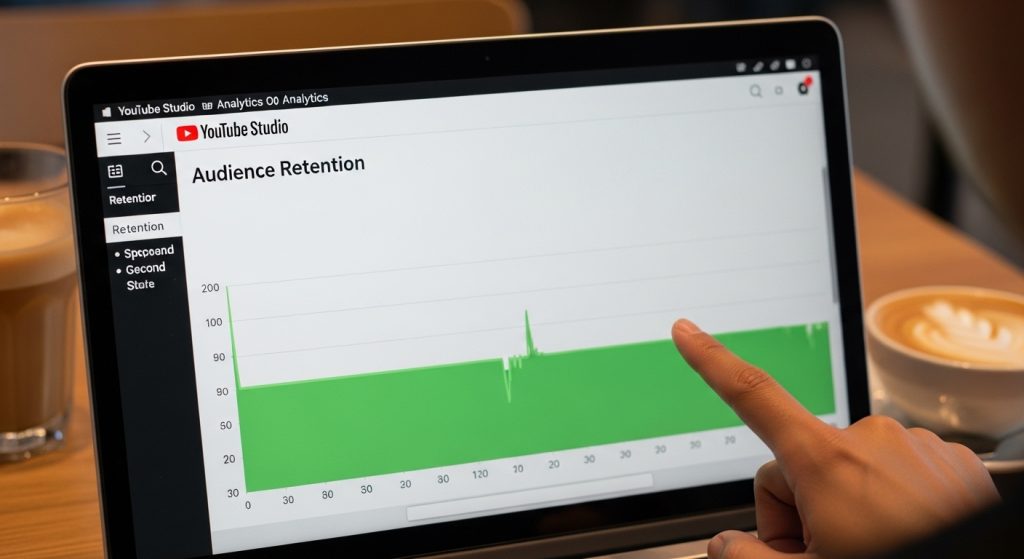
Last year, I consulted for a DIY channel. Their content was excellent—detailed tutorials on home repair—but their average view duration was stuck at 25%.
We looked at their analytics. The massive drop-off was at the 0:05 mark.
The Problem: The host spent the first 45 seconds introducing himself, asking for likes, and explaining safety gear.
The Fix: We cut the intro entirely.
- Old Intro: “Hi, I’m Dave. Today safety is important, so wear goggles…”
- New Intro (The Hook): Video starts with a pipe bursting and water spraying. Dave yells, “If this happens, you have 30 seconds to find the main valve. Here is where to look.”
The Result:
Retention at the 30-second mark jumped from 45% to 78%. The video ended up with 10x the views of their previous average.
The content didn’t change. The video hook did.
Conclusion: Stop the Scroll Today
The secret to hooking your audience isn’t about tricking them; it’s about delivering value so quickly and effectively that they have no choice but to watch.
Your Next Step:
Go to your last three published videos. Watch the first 10 seconds with the sound off. Would you stop scrolling? If the answer is no, apply one of the secrets above to your next script.



0 Comments