
Hitting 40 often feels like someone swapped your metabolic engine for a slower model overnight. You’re doing the same workouts and eating the same salads, yet the scale won’t budge—or worse, it’s creeping upward.
This isn’t just “getting old”; it’s a biological shift that requires a tactical pivot. Most generic advice fails because it ignores the hormonal and muscular changes unique to this decade.
What you will learn in this guide:
- How to override a slowing metabolism using weight loss after 40 strategies.
- The critical role of hormonal balance over simple calorie counting.
- A sustainable blueprint for shedding fat without extreme, low-budget-busting gym memberships.
- How to avoid the “metabolic adaptation” trap that ruins most diets.
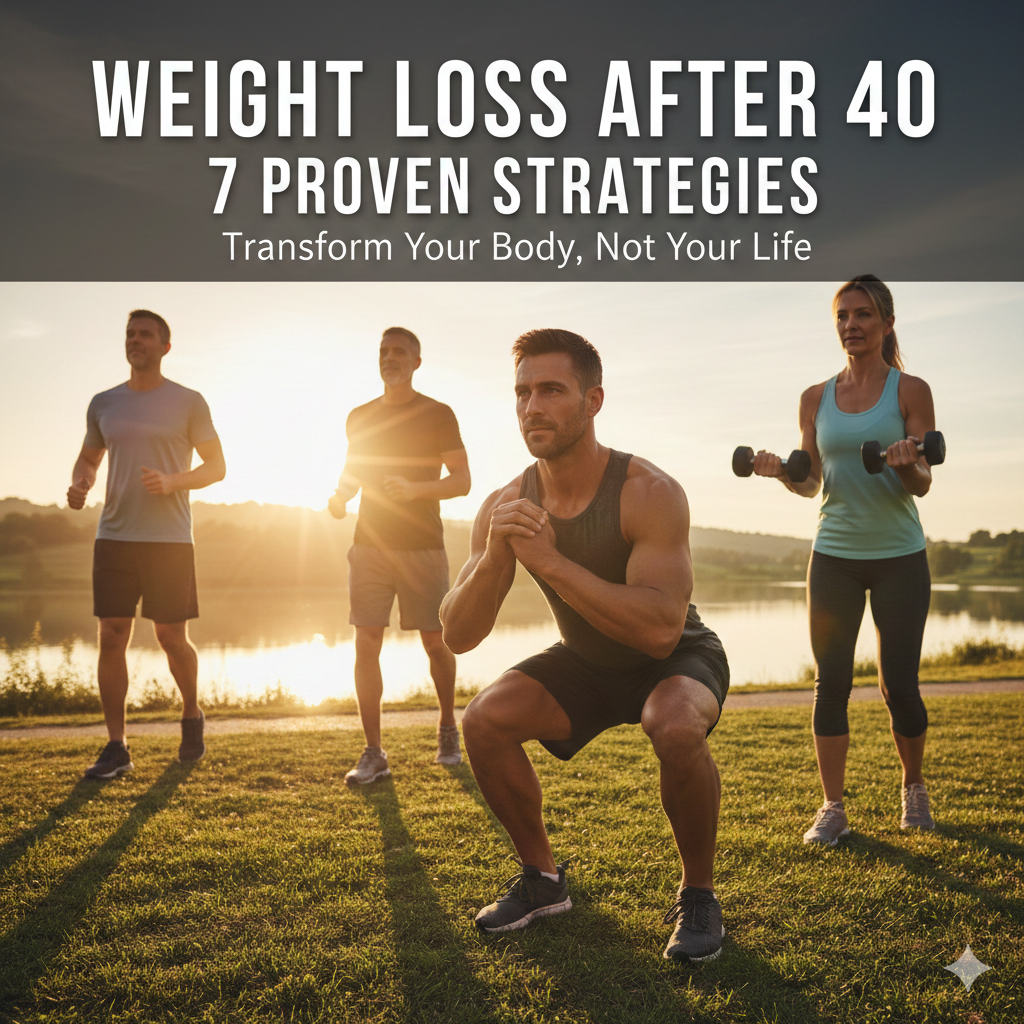
Why Weight Loss After 40 Feels Like an Uphill Battle
The biological landscape changes after the big four-zero. For many, weight loss after 40 is hindered by sarcopenia—the natural loss of muscle mass that begins in your 30s and accelerates now.
Because muscle is more metabolically active than fat, losing it means you burn fewer calories even while sleeping. Couple this with shifting estrogen or testosterone levels, and your body becomes much more efficient at storing visceral fat around the midsection.
The mistake most people make? Slashing calories to near-starvation levels. This only signals to your body that it’s in a famine, causing it to cling to every ounce of fat even harder.
1. Prioritize Protein to Protect Your “Metabolic Fire”
If you want to lose weight after 40, your first priority isn’t cardio—it’s protein synthesis. Your body requires more protein now than it did in your 20s just to maintain the muscle you already have.
Aim for 1.2 to 1.5 grams of protein per kilogram of body weight. This keeps you satiated longer and prevents the muscle wasting that usually accompanies a weight loss journey.
Budget-friendly protein sources include:
- Lentils and chickpeas: High fiber, high protein, and incredibly cheap.
- Canned tuna or sardines: Packed with Omega-3s which help reduce inflammation.
- Eggs: The gold standard for bioavailable protein.
2. Shift from “Steady State” Cardio to Resistance Training
While walking is excellent for mental health, it rarely triggers the hormonal response needed for significant fat loss in your 40s. To move the needle, you need to lift heavy things.
Resistance training creates “afterburn,” where your oxygen consumption remains elevated for hours after the workout. This helps manage hormonal weight gain by improving insulin sensitivity.
You don’t need a fancy gym membership. Use your body weight, old milk jugs filled with water, or inexpensive resistance bands to perform compound movements like squats, lunges, and push-ups.
3. Master the Art of “Metabolic Flexibility”
Your body can burn two types of fuel: sugar (glucose) and fat. As we age, many of us become “metabolically stiff,” meaning our bodies struggle to switch over to burning stored fat.
To improve metabolic flexibility, try a “Time-Restricted Feeding” window. By simply eating your meals within an 8 to 10-hour window (e.g., 10 AM to 6 PM), you give your insulin levels enough time to drop.
When insulin is low, the “gate” to your fat stores opens. This is a zero-cost strategy that requires no special supplements—just a change in the clock.
4. Address the “Silent” Weight Gain Triggers: Stress and Sleep
In your 40s, life is often at its peak stress level—balancing career growth, aging parents, and growing children. High stress levels lead to chronically elevated cortisol.
Cortisol is a “fat-storage” hormone. When it’s high, your body is biologically programmed to store fat, specifically around the abdomen, regardless of how “clean” you eat.
Practical ways to lower cortisol on a budget:
- 10 minutes of box breathing daily to reset the nervous system.
- Prioritizing 7–8 hours of sleep, as sleep deprivation mimics a pre-diabetic state.
- Limit caffeine after noon to ensure your deep sleep cycles aren’t disrupted.
5. Focus on Fiber to Combat Insulin Resistance
Insulin resistance is the primary reason for the “middle-age spread.” Fiber is your secret weapon here because it slows the absorption of sugar into your bloodstream.
Instead of expensive “keto” or “paleo” branded snacks, stick to whole-food fiber. Think cruciferous vegetables like broccoli, cabbage, and cauliflower.
These vegetables contain compounds that help the liver process excess hormones, which is vital for managing hormonal weight gain during perimenopause or andropause.
6. The “Non-Exercise” Secret: NEAT
NEAT stands for Non-Exercise Activity Thermogenesis. This is the energy expended for everything we do that is not sleeping, eating, or sports-like exercise.
In your 40s, we tend to become more sedentary due to office-based roles. Increasing your NEAT can burn an extra 200–500 calories a day without stepping foot in a gym.
Simple ways to boost NEAT:
- Pace while on phone calls.
- Take the stairs, always.
- Garden or do your own housework instead of outsourcing it.
7. Stop the “All-or-Nothing” Dieting Cycle
The most common mistake people over 40 make is the “Monday start” mentality. If they eat one cookie, they decide the whole day is ruined and overeat until the following week.
Consistency beats intensity every time. Adopting an 80/20 rule—where 80% of your food comes from whole, single-ingredient sources—allows for social flexibility.
This prevents the psychological burnout that leads to yo-yo dieting. Remember, your goal isn’t just to lose weight for a wedding; it’s to maintain a healthy weight for the next 40 years.
The Reality of Weight Loss After 40: A Case Study
Take “Mark,” a 44-year-old accountant. He was running 5 miles a day but still gaining weight. His joints ached, and he was constantly tired.
By cutting his runs to twice a week and replacing the other days with 30-minute bodyweight circuits, he saw a shift. He increased his protein and stopped eating after 7 PM.
Within three months, he lost 15 pounds of fat while gaining noticeable muscle definition. More importantly, his energy levels stabilized because he stopped over-taxing his system with excessive cardio and under-eating.
Summary of Success
Weight loss in your 40s isn’t about working harder; it’s about working smarter with your changing biology. By focusing on muscle preservation, hormonal health, and consistent habits, you can achieve a physique that rivals your younger self.
Key Takeaways:
- Eat more protein than you think you need.
- Lift weights to keep your metabolism high.
- Manage stress to keep cortisol in check.
- Focus on consistency, not perfection.
Ready to start your transformation? Choose one strategy from this list—like increasing your daily protein—and implement it for the next 7 days before adding the next.



0 Comments